
Every Email Marketing System Reaches a Point Where It Needs Rethinking
The City of Charles Sturt didn’t just migrate Mailchimp. They took the opportunity to build a better way of communicating with their community.

Robin Adams
Chimpmaster General

“This makes a lot more sense…”
Most organisations don’t set out to create a complicated email marketing system.
In fact, it’s usually quite the opposite. The first newsletter is easy to manage, the subscriber list is small and everyone knows where everything is. Then the organisation grows. Different teams begin communicating with different audiences, new campaigns are introduced and, before long, the email marketing platform starts reflecting years of incremental decisions rather than a deliberate communications strategy.
There’s nothing unusual about that. We see it regularly.
The question is what happens when those decisions begin creating more work than value.
For the City of Charles Sturt, a local council operating in Adelaide, Australia, that question arrived when they recognised that managing separate Mailchimp accounts was making communication more complicated than it needed to be. What initially looked like a straightforward technical project soon became something much more interesting: an opportunity to rethink how the council communicated with its residents.
Looking beyond the technical brief
The original brief was simple enough.
The council had two Mailchimp accounts—one supporting its corporate communications and another for its libraries. The aim was to bring those together into a single platform that would be easier to manage and provide a clearer picture of subscriber activity.
That alone would have been a worthwhile outcome.
But projects like these often reveal opportunities that aren’t obvious at the beginning. Once you start reviewing subscriber data, automations, landing pages and communication processes, you naturally begin asking bigger questions.
Is the current structure still the best one?
Could subscribers have more control over the information they receive?
Could the communications team spend less time maintaining systems and more time creating valuable content?
Those questions shifted the focus from migration to improvement.
Better communication starts with better systems
The City of Charles Sturt communicates with residents about a wide range of services and initiatives, including libraries, community events, environmental programmes, active living, pets and local news.
The challenge wasn’t simply organising those communications inside Mailchimp. It was ensuring residents received information that was relevant to them without creating unnecessary administration for the communications team.
As Trish Dimitrak, Communications Manager, explained:
“We had two separate Mailchimp accounts – one for the Corporate team and one for our Libraries – which meant duplicated work, inconsistent subscriber data and no clear, single view of our audience. Managing two systems made reporting, communications and future planning more complicated than it needed to be.”
It’s a challenge many organisations recognise.
As communication grows, systems often become organised around departments rather than around the people receiving the emails. Over time, that creates duplication, inconsistent data and additional complexity that nobody originally intended.
Rather than accepting those limitations, this project became an opportunity to design a system that better supported both the communications team and the community they serve.
Using the migration as an opportunity
One of the things we enjoy most about projects like this is that they create permission to improve.
If you’re already rebuilding automations, reviewing subscriber data and recreating landing pages, it’s the ideal time to simplify the entire platform rather than reproducing yesterday’s decisions.
That’s exactly the approach taken here.
Subscriber data was reviewed and cleaned. Existing automations were rebuilt where appropriate. Landing pages were recreated, URLs preserved and the overall structure simplified so the communications team could manage everything from one well-organised Mailchimp account.
As Trish reflected afterwards:
“Every step was carefully planned, our subscriber lists were cleaned and organised, and the migration was completed with minimal disruption.”
Good migrations aren’t simply about moving data safely. They’re an opportunity to leave an organisation with a system that’s easier to manage than the one it started with.
A better experience for everyone
The real measure of success wasn’t that two Mailchimp accounts became one.
It was that the council ended up with a communications platform that worked better for everyone involved.
Residents could manage their communication preferences more easily, helping ensure they received information that genuinely interested them. Behind the scenes, the communications team benefited from cleaner data, automated welcome journeys and a single, consistent view of their audience.
The technology became simpler, but the communication became more relevant.
That’s an important distinction because successful email marketing isn’t about sending more campaigns. It’s about making every campaign more useful to the people receiving it.
Better than originally imagined
One comment from Trish has stayed with us since the project finished.
“We finished with a better system than we originally imagined.”
For us, that’s probably the best measure of success any consultancy project can achieve.
The original objective was to consolidate two Mailchimp accounts.
The outcome was a communications platform that was easier to manage, more flexible for the future and better aligned with the way the council wanted to communicate with its community.
Technology was part of that story, but it wasn’t the whole story. The real achievement came from taking the opportunity to step back, question the existing approach and build something that would continue delivering value long after the migration was complete.
Every migration is an opportunity
It’s easy to think of a migration as a technical exercise—a project that simply needs to be completed as quickly and safely as possible.
Our experience has been rather different.
The organisations that gain the most value from these projects are the ones that see them as an opportunity to improve the way they communicate, not just the technology they use to do it.
The City of Charles Sturt is a great example of that approach. What began as a request to consolidate Mailchimp accounts became a chance to simplify processes, improve data quality and create a stronger foundation for future communication.
Sometimes the biggest benefit isn’t the migration itself. It’s what the migration makes possible.

How We Helped Mornington Screening Service Trust Their Email Marketing
Trust your marketing automation with confidence. Discover how Mornington fixed incomplete customer journeys and created a dependable Mailchimp system.
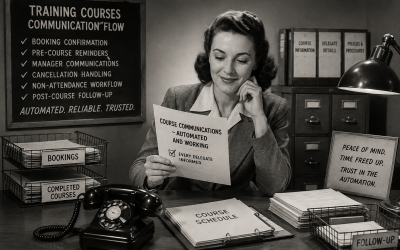
How We Helped an MOT Training Provider Stop Worrying About Course Communications
The MOT Training & Compliance Group relied on manual emails to keep delegates informed before and after their courses. We helped them build a Mailchimp automation system that handles confirmations, reminders, cancellations and follow-ups automatically, giving the team more time and confidence that no one gets forgotten.

How Do You Make Member Communications More Relevant Without Making Them Unmanageable?
How to make member communications more relevant without creating more data, complexity and work than you actually need.

How NICE Simplified Email Marketing by Bringing Five Mailchimp Audiences Together
Discover how Chimp Answers helped NICE combine five Mailchimp audiences, remove duplicate contacts, simplify campaign management and create more targeted communications.

Not Every Organisation Needs More Subscribers
Learn how better audience segmentation helps you send more relevant emails, improve engagement and make better use of the customer data you already have.

Still Sending the Same Email to Everyone? You’re Not Alone.
Still sending the same email to everyone? Discover how audience segmentation can improve engagement, reduce manual work and create better customer experiences.
0 Comments